The Tale of Sinuhe, Fully Translated
This article was written in Arabic; the text below is an English rendering of the author's Egyptian Arabic translation of the ancient text.
An ancient Egyptian story, counted among the most important works of Egyptian literature, translated into Egyptian colloquial Arabic
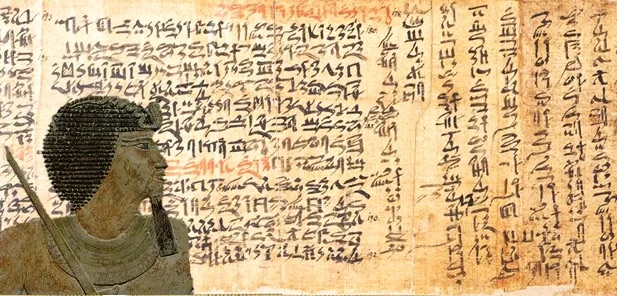
Introduction to the Story (the Author's Explanation)
In the old days, the Tale of Sinuhe was taken as a true or nearly true story about the adventures of one of the men of the Egyptian court, copied from an inscription found in his tomb.
But the truth is that no evidence has ever turned up for a real person named Sinuhe, neither in tomb inscriptions, nor on statues, nor on obelisks.
The story is essentially a work of literature, and that shows in the way events unfold, in the analysis of the main character's inner life, in the way language is used, and also in the picture it paints of the times in Syria and Palestine.
In the story, Sinuhe is a capable man who knows how to handle himself, and he stands for the ideal official at a time when Egypt was living in prosperity and its foreign relations were growing.
He flees the court because of something inside him that he cannot explain, then he carves out a path on his own, and then he discovers that he has to go back to the king, and that the most important thing is to have a respectable burial and funeral rites like an Egyptian.
The story begins with the death of the founder of the 12th Dynasty, King Amenemhat I, and with the news of his death reaching the army, whose commander was his son (who was co-regent and his successor), Senwosret I.
And the story treats Senwosret I in a somewhat propagandistic way.
This story was copied far more than almost any other literary text, as the number of surviving copies shows.
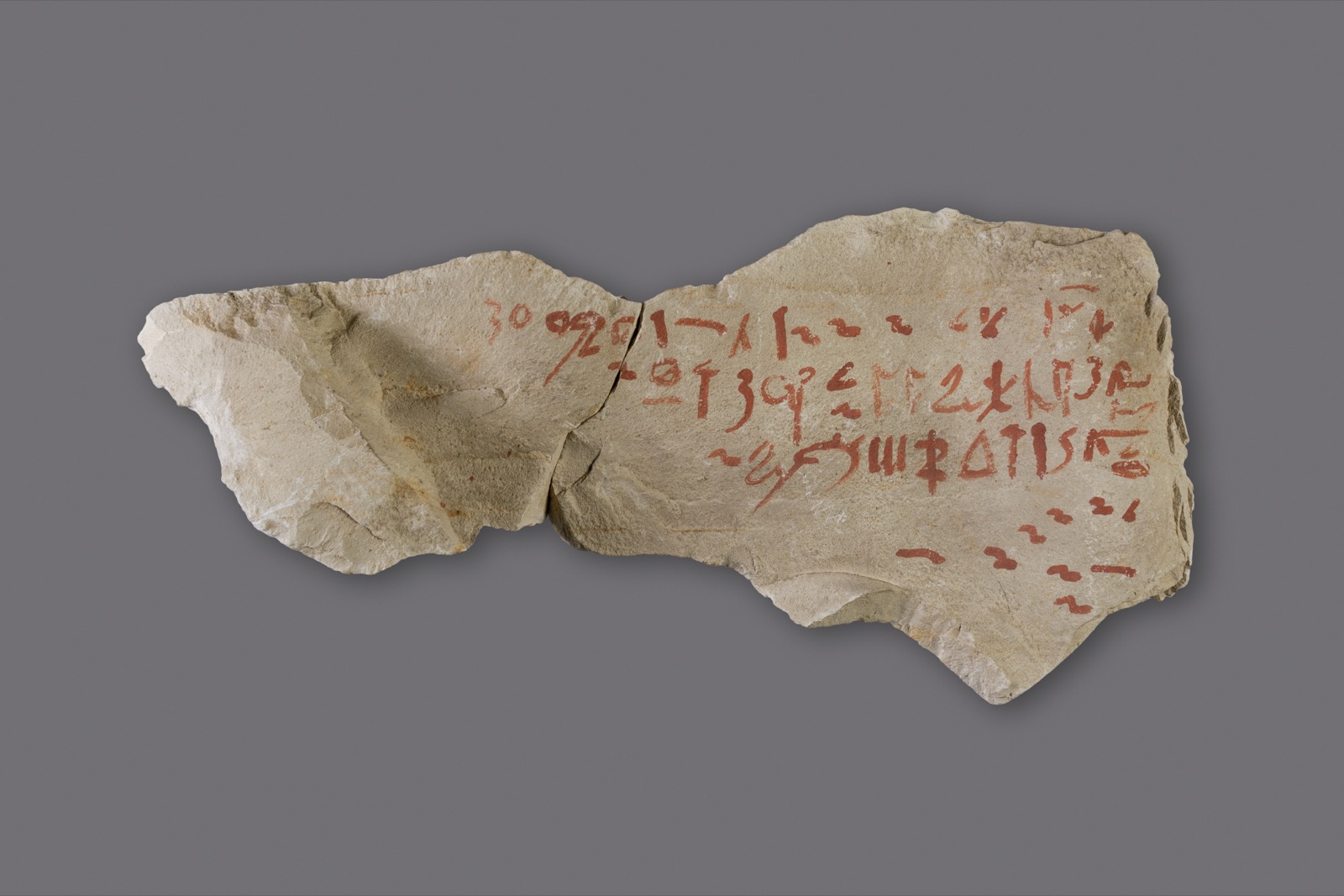
And in the Ramesside period (the 19th and 20th Dynasties), senior scribes and their students used to copy it in the schools on limestone flakes.
The chapter titles you see here are not original; they were added to make the story's division easier to follow.
1) Sinuhe Introduces Himself
Sinuhe says:
I am the hereditary noble and commander, the overseer and governor of the districts of the king's estates in the land of the Asiatics,
the one whom the king loves, the one known in the palace…
I am Sinuhe.
I was a follower of the king and served my lord.
I was a servant in the king's harem, serving the princess of the very highest rank, the wife of King Senwosret,
in “Khnumet-sut”,
and the daughter of King Amenemhat in “Ka-nofru”,
the lady “Nofru”, a woman of great standing.
2) The Death of Amenemhat I and Sinuhe's Flight
Year 30, third month of the Inundation season, day seven.
The god ascended to his horizon…
the King of Upper and Lower Egypt, “Sehetepibre”.
He entered the sky and united with the sun disk,
and the body of the god mingled with the body of the one who made him.
The capital fell silent…
the people were broken…
the great gate was shut,
and the whole palace had its head on its knees in grief,
and the nobles were in mourning.
At that time the king had sent a military expedition to the land of “Tjemehi” (west of Egypt),
and his eldest son Senwosret was the commander of the expedition.
He had been sent to strike the foreign lands and to subdue the people of “Tjemehu”.
Then Senwosret came back,
bringing prisoners with him,
and a great many cattle, beyond counting.
And the men of the palace sent messengers to the western side to inform the king's son of what had happened in the council of rule.
The messengers reached him on the road, at the western frontier,
and he did not wait for a moment.
“The Falcon” (that is, Senwosret) flew off at once with his men,
without letting the army know.
They had also sent word to the rest of the king's sons who were with him on the expedition.
And I was standing close by,
and I heard the voice of someone reading out the message,
and I heard the words…
as if I were in the middle of a conspiracy.
My senses were thrown into confusion,
my arms fell open wide,
and my whole body began to tremble.
I jumped up and ran off quickly to look for a place to hide.
I stood between two trees to cut myself off from the road.
I headed south…
but I had no intention of reaching the capital.
I was afraid that unrest would break out,
and I could not bring myself to say “Live!” after the king.
I passed a place called “Maaty” (the Two Truths),
near “the Sycamore”,
and reached “Snefru's Island”.
I waited at the edge of the cultivation.
At first light I set out…
and found a man standing in the middle of the road.
He greeted me respectfully,
but he was afraid of me.
When supper time came, I reached the harbor of “Negau”.
And with the help of the west wind
I crossed the river in a boat with no rudder.
I passed east of the quarry,
beside “the Lady of the Red Mountain”,
that is, the far side of the river, in the desert.
And I went on foot toward the north
until I reached the “Walls of the Ruler”,
which had been built to keep out the Asiatics and to stop those who cross the desert.
I crouched down among the trees
for fear that the guard on the wall would see me.
I walked through the night…
and when day broke, I reached “Peten”.
I came down at the island of “Kem-wer”.
Thirst crushed me…
and I felt as if I were about to die.
I became parched, my throat was parched.
And I said:
this is the taste of death.
But I took courage
and gathered my body together.
I heard the sound of cattle lowing…
and I looked and found Asiatics.
The sheikh of the Bedouin recognized me…
he was a man who had been to Egypt before.
He gave me water
and boiled milk for me.
And I went with him to his tribe,
and what they did for me was very kind indeed.
And after that…
one land handed me over to another.
I went to Byblos (near Beirut),
and then I came back to “Qedem”.
I stayed there half a year.
And then the man “Ammunenshi” (Amusinenshi)
was the one who took me and brought me back,
and he was the chief of “Upper Retjenu”.
And he said to me:
you will do well with me,
because you will hear the speech of Egypt.
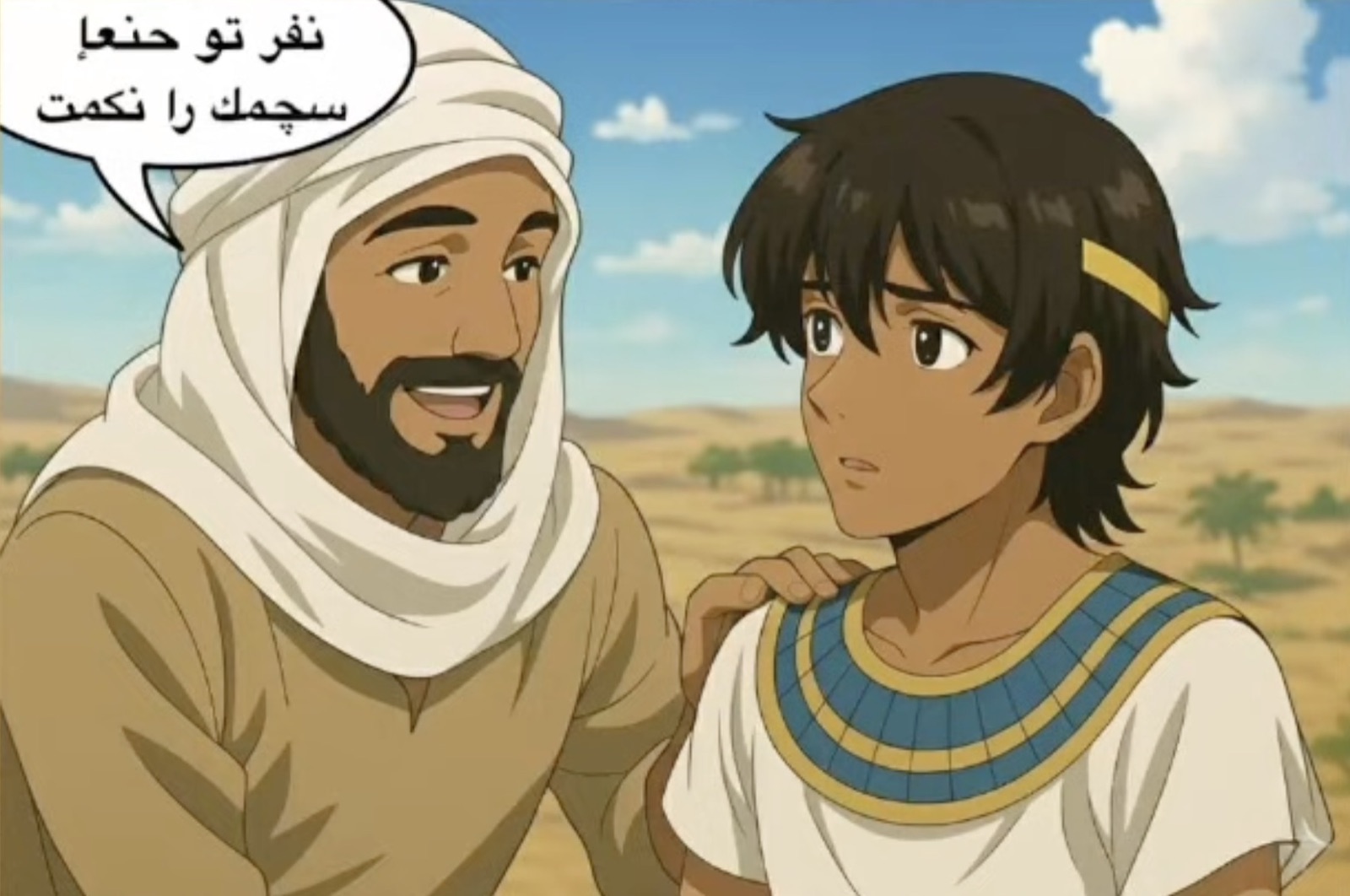
He said that because he knew my reputation,
and had heard about my intelligence,
and the Egyptians who were there had vouched for me.
And then he asked me:
why did you come here?
Has something happened in the capital?
And I said to him:
the King of Egypt… is dead…
and nobody knows what will happen next.
But I was speaking in a roundabout way.
And I told him:
I was coming back from an expedition in the land of the Tjemehu,
and someone brought me the news.
And my mind was thrown into confusion,
and my heart was no longer in my body,
and that is what made me flee.
But nobody accused me of anything,
nobody spat in my face,
I heard no reproach,
and my name was not called out in the land.
I do not know what brought me to this land.
It was as if it were the design of the god.
3) In Praise of Senwosret I
The chief said to me:
well, what will the country do without him?
He was a capable god…
and the dread of him in all the foreign lands
was like the goddess Sekhmet in a year of plague.
And I said to him:
surely his son has entered the palace and taken over the rule.
He is truly a god… without equal.
No one like him came before him.
He is wise,
skilled at planning,
and quick to make decisions.
He was the one who held the foreign lands
while his father the king was in the palace.
He is a hero with the sword…
a fighter without equal.
When he charges the archers… no one can stand before him.
He breaks their horns,
and he cripples their hands,
and his enemy cannot even get his ranks in order.
If he strikes… no one survives.
And if anyone tries to flee… there is no escape for the one who turns his back.
He stands firm at the moment of clash,
and he attacks again… and never turns back.
His heart is strong before the multitudes,
and he allows no fear around him.
And when he charges the entourage… he is full of zeal,
and when he plunders the enemies… he is glad.
The moment he raises his shield… he brings down whoever is in front of him.
He does not need to repeat the blow.
No one can turn aside his arrow,
and no one can draw a bow as he does.
The archers flee before him
as they would flee before the power of the great goddess.
He fights seeing the end from the start,
and he does not care what is left after the battle.
And with all that… he is beloved and kind.
He wins people over with love.
His city loves him more than itself,
and they rejoice in him more than they rejoice in their own god.
Men and women alike are glad of him.
And while he was still “in the egg” he was a conqueror!
As if he had been born ready for victory.
He is the one who makes those around him rich,
because the god has given to him.
How lucky the country is to have him as king!
He is the one who widens the borders.
He conquered the south,
and the north need not trouble his mind,
because he was created to strike the Asiatics and to crush those who roam the desert.
Send to him,
and tell him your name.
And do not stir up rebellion against His Majesty,
because he will do for you what his father did…
and he will do good even to a foreign land if it is loyal to him.
4) Sinuhe in Palestine
The chief said to me:
Egypt is fortunate now… now that we know he is well.
You will stay here with me,
and I will do you good.
He placed me before his children,
and married me to his eldest daughter.
And he let me choose the choicest part of his land,
on the border with another country.
It was a beautiful land called “Yaa”.
It had planted figs and grapes,
and in it wine was more plentiful than water!
Honey was plentiful in it,
and olives were plentiful in it,
and every kind of fruit was on the trees.
And in it there was plenty of barley and wheat,
and cattle of kinds and numbers without end.
And my share was very large.
He made me the sheikh of a tribe, one of the best tribes of his country.
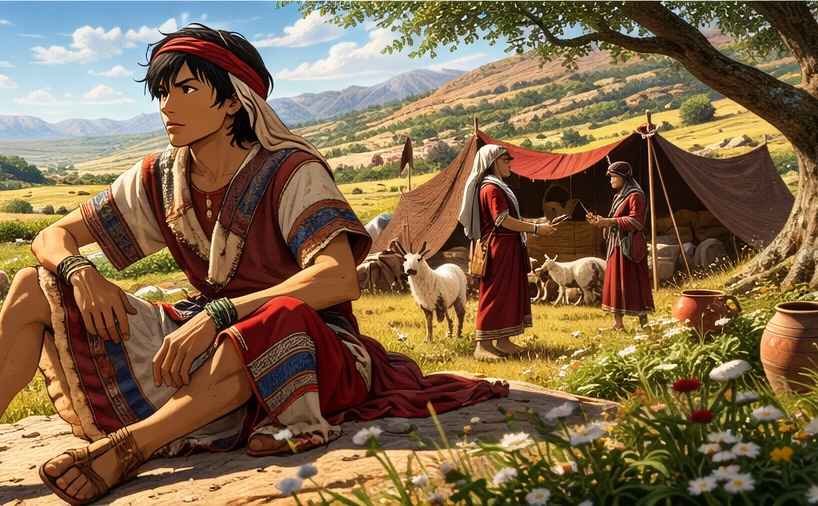
Daily food used to come to me,
and daily wine,
and cooked meat,
and roast fowl,
besides the game of the desert.
They hunted for me,
and set the food before me,
besides what my hunting dogs brought in.
And they made me many sweets with milk.
I stayed for years…
and my children grew up and became men,
and each one came to hold his own tribe.
And any messenger passing from the north to the south, heading for the capital,
used to spend the night with me.
And I made every Egyptian who passed by stay with me.
I gave drink to the thirsty,
I put the lost back on the road,
and I rescued the one who had been robbed.
And when the Asiatics began to move against the chiefs of the foreign lands,
I used to advise them on their plans.
And the ruler of Retjenu made me, for years, a commander in his army.
And any land I attacked…
I would drive them out from their crops and from their wells.
I would plunder their cattle,
and take their people,
and their harvests.
And I would kill them with my strength,
and with my bow,
and with my maneuvers,
and with my clever counsel.
And he loved me…
because he saw my courage.
And he put me in charge of leading his children
when he saw my strength growing.
5) The Fight (the Champion's Duel)
One day…
a strong man from Retjenu came to me, challenging me at my tent.
He was a champion without equal,
and he had defeated many people.
He said he would fight me…
because he intended to destroy me.
And he wanted to plunder my cattle,
at the urging of his tribe.
But my chief consulted me,
and I said:
I do not know him.
I am not one of his people, that I should go about in his camp.
Did I go in to his women?
Or climb over his walls?
This is spite…
because he sees me doing the chief's work.
I am like a bull among a strange herd.
The herd's bull charges at me,
but the Egyptian bull will beat him.
Can a subordinate be loved
if he tries to act like the master?
No foreign archer
will become an ally of a man from the Delta.
What could possibly join a papyrus plant to a rock?
Does the bull want to fight?
Even a champion bull may flee
if he fears one who is his equal.
But if he wants a fight,
let him say what he wants.
Does the god not know what he has written?
Surely he knows.
I sat up the night, bending the bow
and readying my arrows.
I sharpened the dagger
and polished the weapons.
And when day broke…
all of Retjenu had gathered.
The tribes mustered,
the whole land assembled,
and the battle was settled.
The man came out to me while I was waiting for him.
I stood before him.
Everyone's heart was burning for me…
men and women were crying out.
Every heart was afraid for me,
and said:
is there anyone else who can stand before this beast?
His shield, and his axe,
and the bundle of javelins he carried…
in the end became mine.
I avoided his weapon,
and let his arrows pass beside me.
Not one arrow touched me.
He cried out…
thinking he would defeat me.
And he came close to me.
I shot him with an arrow…
the arrow lodged in his neck.
He screamed and fell on his face.
Then I went at him with his own axe,
and brought him down completely.
I raised the war cry over his back.
All the Asiatics cried out.
And I gave thanks to the god “Montu”
while they were wailing over him.
And the chief “Ammunenshi” embraced me and kissed me.
I took his belongings,
and I took his cattle.
Everything he had meant to do to me…
I did to him.
I took what was in his tent,
and plundered it all.
And I became rich,
the owner of treasures and many cattle.
This is what the god does…
to have mercy on one he had been angry with
and had lost in another land.
But today… his heart is satisfied.
A fugitive fled because of his condition,
but my reputation is in the capital.
The hungry man was wandering from hunger,
but I give my neighbor bread.
The one who left his country naked,
I have white clothes and clean linen.
The one who ran because there was nobody to send,
I have many servants.
My house is fine,
and my place is spacious.
And the palace still remembers me.
6) Sinuhe Longs to Return to Egypt
O god… whoever you are…
you who wrote this flight…
have mercy on me, and bring me back to the capital.
Perhaps you will let me see the place where my heart lives.
What matters more than returning my dead body
to the land where I was born?
Come and help me.
Let a good end come about.
May the god grant me his favor.
And set right the end of one who was wretched,
and care for one who was driven to live in a foreign land.
And if today the god is merciful,
and hears the prayer of one who is far away,
then let him change my place
and return me to the place he brought me from.
And may the king also have mercy on me,
that I may live on his bounty.
And may I see “the lady of the land” who is in the palace,
and serve her children.
May my body become young again.
I have grown old…
and weakness has come upon me.
My eyes are heavy,
my arm cannot move,
my legs cannot walk,
and my senses are spent.
I am close to death…
and they will send me off to the cities of eternity.
But if only I could serve “Mistress-of-All”
so that she would say a kind word about me to her children.
And let me live forever in her shade.
7) The King Sends Word… and a Royal Decree
This speech reached King Senwosret I.
The king sent me provisions and gifts from his royal bounty.
And he gladdened the heart of this servant
as one gladdens the ruler of a foreign land.
And the king's children who were in the palace
sent me their messages.
And then a formal “royal decree” came to me, telling me to return to Egypt.
The text of the decree in colloquial Arabic:
The king says to Sinuhe:
This decree comes to you to tell you:
you have passed through many foreign lands,
and gone from “Qedem” to “Retjenu”.
Following your heart… one land handed you over to another.
What did you do that anyone should be your enemy?
You did not curse, that anyone should blame you.
You did not speak evil in the council of the elders, that anyone should rebuke you.
The idea that came to you took hold of you…
though I had nothing in my mind against you.
The queen in the palace is well,
and her children are well.
You will return,
and you will receive treasures,
and you will live on their bounty.
Return to Egypt,
and see the capital where you were born.
You will kiss the ground at the great gate,
and you will sit among the senior men of the palace.
You have grown old…
and your strength has left you.
Think of the day of your burial…
of being transformed into an honored state.
A night of preparation will be made for you, with oils and ointments.
And on the day of burial a funeral procession will go out:
a human-shaped coffin covered with gold,
its head of lapis lazuli,
and the sky above you
while you lie in the outer coffin,
and oxen dragging you,
and singers before you.
The “Muu” dance will be performed at your tomb.
And the offering formulas will be recited for you.
And they will slaughter at the entrance of your tomb chapel.
And the pillars of your tomb will be made of limestone,
as they are made for the king's children.
You will not die in a foreign land,
and the Asiatics will not carry you,
and they will not bury you in a ram's skin as they do.
All this is a great deal for one who has wandered the world.
Think of your dead body…
and come back.
8) Sinuhe's Reaction and His Reply to the Decree
The decree reached me while I was standing among my tribe.
I prostrated myself and touched the ground,
and then it was read out to me.
I threw dust on my chest,
and then I went around the camp, rejoicing and saying:
How can this happen to the servant
who lost his way and went to the land of the barbarians?
Your generosity is great, O King…
it is you who saved me from death.
And your “ka”
will let me spend the end of my life in the capital.
And then I sent off a formal reply:
The servant Sinuhe says:
Peace… peace.
This flight that I made was out of ignorance,
and you know that.
O good god,
lord of the Two Lands,
whom Re loves,
whom Montu blesses,
and Amun, and Sobek-Re, and Horus, and Hathor, and all the gods of Egypt…
(Here he lists many gods and prays for the king)
And then he says:
The king understands people,
and cannot possibly believe that this servant was lying.
I was afraid to speak.
The great lord knows the mind of the one he asks about, on his own.
Here I am in the hands of someone who cares for me…
I am under his care.
Your Majesty,
you are Horus the victorious,
and your arm is strong over all the lands.
(Then he proposes the names of foreign rulers who could ally themselves with Egypt)
And then he says:
The flight that I made…
was not planned.
It was not in my head.
I did not prepare for it.
I cannot say what separated me from my country.
It was like a dream:
like a man from the Delta who dreams that he is in Aswan,
or a man from the marshes who finds himself in Nubia.
I was not afraid…
and no one was chasing me.
And I heard no blame.
And no one heard my name in the land.
Except that my body was trembling,
and my legs were running,
and my senses were in confusion,
and it was the god who wrote this flight who was dragging me along.
I am not stubborn.
A person becomes humble when he knows his own country.
Fear of you is in every land.
Whether I am in the capital or here…
everything beneath this horizon is yours.
The sun rises at your command,
and the water is drunk if you wish it,
and the air is breathed if you say so.
Now that you have summoned me…
I will leave my possessions to my children here.
And may the king do what he wishes…
because a person lives on the air that the king gives.
9) Sinuhe's Return to Egypt
I was allowed to stay one day in “Yaa”
to distribute my belongings among my children.
My eldest son took over the tribe.
All my possessions came into his hand:
the servants,
the cattle,
the fruit,
and the trees that bear.
And then I set out south.
I stopped at the “Ways of Horus” (a border post).
The commander of the guard there sent word to the capital.
The king sent a capable overseer,
and with him ships loaded with gifts for the Asiatics
who came with me
to bring me to the Ways of Horus.
I called each one by his name,
and each one went about his work.
And then we embarked and raised the sail.
Dough was being kneaded beside us (for beer)
until we reached the harbor of the capital.
10) Sinuhe in the Palace
At dawn…
I was summoned.
Ten men went
and ten men came
to bring me to the palace.
I put my head on the ground between the sphinx statues.
The king's children were standing at the gate to receive me.
The men of the palace brought me in as far as the reception hall.
I found the king sitting on the great throne
in a place covered with gold.
When I prostrated myself before him
I lost consciousness.
The king spoke to me kindly,
but I was like a man caught in the night.
My spirit had fled,
and my body was trembling.
My heart was not in my body,
and I could not tell life from death.
The king said to one of the men of the palace:
raise him up and let him speak.
And then he said to me:
You see? You have come back…
after wandering through the foreign lands.
Exile has worn you down,
you have grown old,
and old age has caught up with you.
Your burial is no small matter…
now the archers will not carry you.
Stop slinking about and hiding.
When your name was called… you did not answer.
Do not be afraid of punishment.
I answered in fear:
What has my lord said to me?
If I try to answer…
I have not failed in my duty to the god.
The fear is inside my body,
like the fear that made me flee.
Here I am before you…
and my life is yours.
And may the king do what he wishes.
11) The Moment the Queen and the Princesses Enter
The king's children came in.
The king said to the queen:
this is Sinuhe… he has come back.
The queen let out a great scream,
and the king's children screamed together.
And they said to the king:
this is not he, my lord!
The king said:
no… it is he.
And then they brought the necklaces, the tambourines and the musical instruments,
and presented them to the king.
And they said prayers for the king,
that he should live,
that the crowns of Upper and Lower Egypt should be united,
and that the sacred serpent should be placed on his brow.
And then they said:
Give us this reward…
the Bedouin sheikh “سيميهيت” (Si-Mehyt, “Son of the North Wind”),
the archer who was born in Egypt.
He fled from your fear
and from your awe.
But no one is afraid of your face…
whoever sees you will not be afraid.
The king said:
he will not be afraid…
he will not be terrified.
He will be one of the men of the palace
and will be placed among the nobles.
Take him to the dressing hall…
to get him ready.
12) Sinuhe's Standing Is Restored and His Burial Is Prepared
When I came out of the dressing hall,
the king's children took my hand
and we entered through the great gate.
I was assigned a house belonging to one of the king's sons.
It had splendid things,
and a cooling room,
and paintings of the horizon.
And it had treasures from the king's treasury,
and royal linen clothes in every room,
and the finest myrrh.
All the servants were at work.
The years of exile were stripped from my body.
The excess hair was removed from my body,
and my hair was combed.
And they gave the desert its load,
and the sand-dwellers their clothes.
They dressed me in clean linen,
and anointed me with the finest oil.
I slept on a bed.
I handed out sand to the people who live on it,
and wood oil to the people who anoint themselves.
A great house was made for me
that had once belonged to one of the senior men of the palace.
Many workers were building it,
and every tree was planted anew.
Food came to me from the palace
three and four times a day,
besides what the king's children gave me.
Not a moment's interruption.
And they built me a stone pyramid
among the pyramids.
The overseers of the stonecutters laid out the ground,
the draftsman drew the plan,
and the sculptors carved.
And the overseers of the necropolis took care of it.
And all the tomb equipment was prepared.
“Ka” servants were assigned to me,
and a funerary endowment of land and crops was made for me.
And a statue covered with gold was made for me,
and its kilt was of electrum (an alloy of gold).
The king himself ordered this.
No “commoner” had ever had this done for him before.
I remained in the king's favor
until the day of departure came.
And so… the story is finished.