Ancient Egyptian Dictionary for Beginners – Bastet, Part 1
This is the first part of the Bastet Dictionary. It collects words and expressions from different stages of the Egyptian language, along with modern teaching sentences built according to its vocabulary and grammar.
Middle Egyptian is the main linguistic reference here, with examples from Late Egyptian and Demotic. We indicate the stage of the language and the source as far as possible, and we distinguish between a dictionary word, a grammatical example, a historical attestation, and a modern construction.
1. Greetings and Farewells
| Egyptian (Latin transliteration) | English |
|---|---|
| hy 𓉔𓇋𓇋 SourceHellenistic period – TLA; Papyrus Turin 1791 | Hail! / Hi! |
| ii.ti / ii.wy 𓇍𓇋𓏭𓂻𓍘𓇋 /𓇍𓅱𓏭 SourceMiddle Egyptian – Allen (2014) | Welcome (be come) |
| m Htp 𓅓 𓊵𓏏𓊪 SourceMiddle Egyptian – Allen (2014) | Welcome (lit. “in peace”) |
| iiwy m Htp 𓇍𓅱𓏭 𓅓 𓊵𓏏𓊪 SourceNew Kingdom – UCL; Papyrus Nu, 125C | Welcome (double / emphatic) |
| inD Hr.k 𓐩 𓏌 𓏏 𓁷 𓏤 𓎡 SourceMiddle Egyptian – Allen (2014) | Greetings to you (m.) |
| inD Hr.t 𓐩 𓏌 𓏏 𓁷 𓏤 𓏏 SourceMiddle Egyptian – Allen (2014) | Greetings to you (f.) |
| m-a Htp 𓅓𓂝 𓊵𓏏𓊪 SourcePeriod unspecified – Allen (2014) | Goodbye (with peace) |
| nyny 𓈖𓏭𓈖𓏭 SourceFrom the New Kingdom – TLA; njnj | Greeting |
| dwꜣw nfr 𓇼𓄿𓅱𓇳 𓄤𓆑𓂋 SourceModern construction – TLA 178000 | Good morning (lit. a good morning) |
| mSrw nfr 𓅓𓈙𓂋𓃭𓅱𓇱 𓄤 SourceModern construction – Allen, Dictionary | Good evening |
| rwhA nfr 𓂋𓅱𓉔𓄿𓇱 𓄤 SourceModern construction – Allen, Dictionary | Good evening |
| grH nfr 𓎼 𓂋 𓎛 𓇰 𓄤 SourceModern construction – Allen, Dictionary | Good night |
| hrw nfr 𓉔𓂋𓅱𓇳𓏤 𓄤 SourceModern construction – Allen, Dictionary | Good day – festival day |
| hrw-ms 𓉔𓂋𓅱𓇳𓏤 𓄟𓋴 SourceDemotic, 332 BCE–324 CE – TLA dm225 | Birthday |
| hrw msw.t nfr 𓉔𓂋𓅱𓇳𓏤 𓄟𓅱𓏏 𓄤 SourceModern construction – Allen, Dictionary | Happy birthday |
2. Yes, No, and Common Answers
| Egyptian (Latin transliteration) | English |
|---|---|
| tiw 𓍘𓅱 SourceMiddle Egyptian (Dynasty 17) – TLA; Westcar 8,14 | Yes! |
| n 𓈖 SourceMiddle Egyptian – Allen, Dictionary | not |
| nn 𓂜𓈖 SourceMiddle Egyptian – Allen, Dictionary | not |
| m-bi(A) 𓅓𓃀𓇋𓄿 SourcePeriod unspecified – Allen (2014) | No! / on the contrary |
| n-zp 𓈖 𓊃𓊪𓊗 SourceMiddle Egyptian – Allen (2014) | never |
| nfr 𓄤𓆑𓂋 SourceMiddle Egyptian – Allen, Dictionary | Perfect/good / fine |
| aA 𓉻𓂝𓄿𓏛 SourceMiddle Egyptian – Allen, Dictionary | Great |
| wr 𓅨𓂋 SourceMiddle Egyptian – Allen, Dictionary | Very |
| nHmn 𓈖𓈟𓅓𓈖 SourceMiddle Egyptian – Allen (2010), §10.3 | Certainly! |
| in 𓇋𓈖 SourceMiddle Egyptian – Allen (2014) | indeed (emphatic part.) |
| ink nfr 𓏌𓎡 𓄤 SourceMiddle Egyptian – Bibliotheca Alexandrina: adjectival sentence | I’m fine |
| mr ib,… 𓍋𓅓𓂋𓅪 𓄣𓏤 SourceMiddle Egyptian – Faulkner; mr jb n | feeling sorry (literal: the heart feels pain) |
| mr ibi n.k 𓍋𓅓𓂋𓅪 𓄣𓏤𓇋 𓈖𓎡 SourcePeriod unspecified – Allen (2014) | I’m sorry for you |
| mr jb.s n.f 𓍋𓅓𓂋𓅪 𓄣𓏤𓇋𓋴 𓈖𓆑 SourcePeriod unspecified – Allen (2014) | She is feeling sorry for him. |
mHi.i Hr.kSourcePeriod unspecified – Allen (2014) | I’m worried for you |
| wxA 𓅱𓆼𓄿 SourceFrom the Old Kingdom – TLA; wḫꜣ | to want |
3. Introducing Yourself and Asking Questions
| Egyptian (Latin transliteration) | English |
|---|---|
| rn.i … 𓂋𓈖𓇋 SourceModern construction – Allen (2014) | My name is … |
| rn.i Amr 𓂋𓈖𓇋 𓂝𓅓𓂋𓀀 SourceModern construction – Allen (2014) | My name is Amr |
| m 𓅓𓂝𓏤 | what ? |
| ptr rn.k 𓊪(𓅱)𓏏𓂋 𓂋𓈖𓎡 SourceMiddle Egyptian – Bibliotheca Alexandrina: interrogatives | What’s your name? (m.) |
| ḫy-qd 𓐍𓏭𓇋𓇋𓀁 𓐪𓂧𓏌𓏛 SourceNew Kingdom, 1539–1291 BCE – TLA 852268 | How are you? |
| zy / zi 𓊄𓇋𓇋 | which ? |
| iSst / ix 𓇋𓍱𓈙𓋴𓏏 / 𓇋𓐍𓏛 | what ? |
| xy qd.k ? 𓐍𓏭𓇋𓇋𓀁 𓐪𓂧𓏌𓏛𓎡 SourceNew Kingdom – TLA 852268 | How are you? (lit. “how is your form”) |
| Tnw / Tni 𓍿𓈖𓏌𓅱𓌙𓅯 | Where? |
zi nwSourceMiddle Egyptian (Dynasty 17) – ARCE (2013), p. 55; Westcar 9,15 | when ? |
| n Tnw 𓈖 𓍿𓈖𓏌𓅱𓌙𓅯 SourceNapatan / Late Egyptian – TLA 850058 | When |
| xy wr ? 𓐍𓏭𓇋𓇋𓀁 𓅨𓂋 SourcePeriod unspecified – Allen (2014) | How much? |
| nim / nym ? 𓈖𓏭𓅓𓂝𓏤 SourceLate Egyptian – Neveu, p. 213 | who? |
| nym? 𓈖𓏭𓅓𓂝𓏤 SourceLate Egyptian – Neveu, pp. 212, 215 | Who is he? |
ntk nim ?SourceLate Egyptian – Neveu, p. 213 | who are you ? |
| nim tr tw ? 𓈖𓏭𓅓 𓏏𓂋𓆵𓍿𓅱? SourcePeriod unspecified – Allen (2014) | who are you ? |
| ix ir.n.k 𓇋𓐍𓏛 𓁹𓈖𓎡 SourcePeriod unspecified – Allen (2014) | What did you do? |
| Tnw Sm.k 𓍿𓈖𓏌𓅱𓌙𓅯 𓈝𓅓𓂻𓎡 SourcePeriod unspecified – Allen (2014) | Where are you going? |
4. Thanks
| Egyptian (Latin transliteration) | English |
|---|---|
| dwꜣ 𓇼𓄿𓀢 Source2494 BCE–324 CE – TLA 177930 | To praise / worship |
| dwꜣ nṯr 𓇼𓄿 𓊹 Source2686 BCE–324 CE – TLA 178070 | To praise / worship a god |
dwꜣ nṯr n + شخصSourceMiddle Kingdom, Dynasty 12 – TLA: UC14333 | A construction for thanking / acclaiming someone |
dwꜣ nṯr n.kSourceModern construction – Allen (2014) | Thanking a man: teaching template |
dwꜣ nṯr n.ṯSourceModern construction – Allen (2014) | Thanking a woman: teaching template |
A note on thanks: dwꜣ.k and dwꜣ.t were removed as stand-alone equivalents of “thank you”. Adding a pronoun to the verb alone does not give that meaning. The sentence “we thank our Lord for my mother” was also removed: the particle n inside a construction of thanks or praise does not automatically equal “because of” in Arabic; a context and an attestation are needed for the intended meaning.
5. Definite Articles
| Egyptian (Latin transliteration) | English |
|---|---|
| pA 𓅮𓄿 SourceMiddle Egyptian → Late Egyptian – Allen (2014) | That / aforementioned (m.); the in Late Egyptian |
| tA 𓏏𓄿 SourceMiddle Egyptian → Late Egyptian – Allen (2014) | That / aforementioned (f.); the in Late Egyptian |
| nꜣ 𓈖𓄿 SourceMiddle Egyptian → Late Egyptian – Allen (2014) | Plural demonstrative; the (plural) in Late Egyptian |
6. Demonstratives
| Egyptian (Latin transliteration) | English |
|---|---|
| pn 𓊪𓈖 SourceMiddle Egyptian – Allen, Dictionary | this |
| tn 𓏏𓈖 SourceMiddle Egyptian – Allen, Dictionary | this |
7. Time
| Egyptian (Latin transliteration) | English |
|---|---|
| zp 𓊃𓊪𓊗 SourceMiddle Egyptian – Allen, Dictionary | time |
| hrw 𓉔𓂋𓅱𓇳𓏤 SourceMiddle Egyptian – Allen, Dictionary | Day |
| pA hrw 𓅮𓄿 𓉔𓂋𓅱𓇳𓏤 Source1980–30 BCE – TLA 58940 | this day/ today |
| hrw pn 𓉔𓂋𓅱𓇳𓏤 𓊪𓈖 SourceMiddle Egyptian – Allen (2014) | Today (lit. “this day”) |
| min 𓏇𓈖𓇳 SourceMiddle Egyptian – Allen, Dictionary | Now / today |
| m-mn.t 𓅓𓏠𓈖𓏏𓇳 SourceLate Egyptian – Winand (2009) | Daily / every day |
| m pA hrw 𓅓 𓅮𓄿 𓉔𓂋𓅱𓇳𓏤 SourceLate Egyptian (Ramesses II) – TLA; Leiden I 366,7 | Today |
m-tA-wnw.tSourceLate Egyptian (Ramesses II) – TLA; Harris 500,6,12 | Right now |
| ra nb 𓂋𓂝𓇳𓎟 SourceMiddle Egyptian – Allen, Dictionary | every day |
| sf 𓋴𓆑𓇳 SourceMiddle Egyptian – Allen, Dictionary | Yesterday |
| dwA.w 𓇼𓄿𓅱𓇳 SourceMiddle Egyptian – Allen, Dictionary | Tomorrow / morning |
| bkA 𓃀𓂓𓇳𓈃 SourceMiddle Egyptian – Allen, Dictionary | Morning |
| grH 𓎼 𓂋 𓎛 𓇰 SourceMiddle Egyptian – Allen, Dictionary | Night |
| rnp.t 𓆳𓏏𓏤 SourceMiddle Egyptian – Allen, Dictionary | Year |
| Abd 𓄿𓇹𓂧𓅱 SourceMiddle Egyptian – Allen, Dictionary | Month |
| Dt 𓆓𓏏𓏤 SourceMiddle Egyptian – Allen (2014) | Eternity / enduring permanence |
| nHH 𓅘𓎛𓇳𓎛 SourceMiddle Egyptian – Allen (2014) | Eternity / recurrent renewal |
8. People and Family
| Egyptian (Latin transliteration) | English |
|---|---|
| s 𓊃𓀀𓏤 SourceMiddle Egyptian – Allen, Dictionary | Man / person |
| s.t 𓊃𓏏𓁐 SourceMiddle Egyptian – Allen, Dictionary | Woman |
| rmT 𓂋𓍿𓀀 Source2686 BCE–324 CE – TLA 94530 | Human being / person |
| HqA 𓋾𓈎 SourceMiddle Egyptian – Allen, Dictionary | Ruler |
| HqA km.t 𓋾𓈎 𓆎𓅓𓏏 SourceModern construction – Allen, Dictionary | Ruler of Egypt |
| nTr 𓊹 SourceMiddle Egyptian – Allen, Dictionary | God |
| nTr.t 𓊹𓏏 Source3150 BCE–324 CE – TLA 90280 | Goddess |
| mwt 𓅐𓏏 SourceMiddle Egyptian – Allen, Dictionary | Mother |
| it 𓇋𓏏 SourceMiddle Egyptian – Allen, Dictionary | Father |
| sn 𓌢𓀀 SourceMiddle Egyptian – Allen, Dictionary | Brother |
| sn.t 𓌢𓏏𓁐 SourceMiddle Egyptian – Allen, Dictionary | Sister |
| sA 𓅭𓏤 SourceMiddle Egyptian – Allen, Dictionary | Son |
| sAt 𓅭𓏏 SourceMiddle Egyptian – Allen, Dictionary | Daughter |
| Hm.t 𓈟𓏏𓁐 SourceMiddle Egyptian – Allen, Dictionary | Wife |
| hi 𓉔𓇋𓂺 SourceMiddle Egyptian – Allen, Dictionary | Husband |
| Xrd 𓄡𓂋𓂧 SourceMiddle Egyptian – Allen, Dictionary | Child |
| ms 𓄟𓋴𓀔𓀀 SourceMiddle Egyptian – Allen, Dictionary | infant/child |
| nn 𓏌𓏌𓏌𓀔 SourceMiddle Egyptian – Allen, Dictionary | infant / small child |
9. Royal Titles
| Egyptian (Latin transliteration) | English |
|---|---|
| nsw.t 𓈖𓇓𓏏 SourceMiddle Egyptian – Allen, Dictionary | King – King of Upper Egypt |
| bit.y 𓆤𓏏𓏭𓀵 SourceMiddle Egyptian – Allen, Dictionary | King – who belongs to the bee – king of Lower Egypt |
| nsw.t bity 𓇓𓏏 𓆤𓏏 SourceMiddle Egyptian – UCL: Amenemhat I | King of Upper and Lower Egypt |
| nb.ty 𓅒 SourceFrom the First Dynasty – UCL: Two Ladies title | The Two Ladies / Nebty title |
| nb tAwy 𓎟𓇾𓇾 SourceMiddle Egyptian – Allen, Dictionary | Lord of the two lands – King |
| sA ra 𓅭𓇳 SourceMiddle Egyptian – UCL: Amenemhat I | Son of Ra |
10. The Body
| Egyptian (Latin transliteration) | English |
|---|---|
| tp 𓁶𓏤 SourceMiddle Egyptian – Allen, Dictionary | Head |
| Hr 𓁷𓏤 SourceMiddle Egyptian – Allen, Dictionary | Face |
| ir.t 𓁹𓏏𓏤 SourceMiddle Egyptian – Allen, Dictionary | Eye |
| rA 𓂋𓏤 SourceMiddle Egyptian – Allen, Dictionary | Mouth |
| a 𓂝𓏤 SourceMiddle Egyptian – Allen, Dictionary | Arm / hand |
| Dr.t 𓇥𓂋𓏏𓂩 SourceMiddle Egyptian – Allen, Dictionary | Hand |
| ib 𓄣𓏤 | Heart; inner self; mind; character; desire |
| HAty 𓄂𓏏𓏭𓄣 Source2686 BCE–200 CE – TLA 100400 | Heart, often the anatomical heart |
| X.t 𓄡𓏏𓏤 SourceMiddle Egyptian – Allen, Dictionary | Belly / body |
| rd 𓂋𓂧𓂾 SourceMiddle Egyptian – Allen, Dictionary | Foot |
| Dba 𓆓𓃀𓂝𓂭 SourceMiddle Egyptian – Allen, Dictionary | finger |
11. Nature and Places
| Egyptian (Latin transliteration) | English |
|---|---|
| p.t 𓊪𓏏𓇯 SourceMiddle Egyptian – Allen, Dictionary | Sky / heaven |
| tA 𓇾 SourceMiddle Egyptian – Allen, Dictionary | Earth / land |
| mw 𓈗 SourceMiddle Egyptian – Allen, Dictionary | Water |
| ra 𓂋𓂝𓇳 SourceMiddle Egyptian – Allen, Dictionary | Sun / Re (sun god) |
| iaH 𓇋𓂝𓎛𓇹 SourceMiddle Egyptian – Allen, Dictionary | Moon |
| pr 𓉐𓏤 SourceMiddle Egyptian – Allen, Dictionary | House |
| niw.t 𓊖𓏏𓏤 SourceMiddle Egyptian – Allen, Dictionary | City / town |
| km.t 𓆎𓅓𓏏 SourceMiddle Egyptian – Allen, Dictionary | Egypt (the black soil land) |
12. Common Verbs
| Egyptian (Latin transliteration) | English |
|---|---|
| sDm 𓄔𓅓 SourceMiddle Egyptian – Allen, Dictionary | To hear / listen |
| mAA 𓌳𓁹𓄿𓄿 SourceMiddle Egyptian – Allen, Dictionary | To see |
| Dd 𓆓𓂧 SourceMiddle Egyptian – Allen, Dictionary | To say / speak |
| iri 𓁹 SourceMiddle Egyptian – Allen, Dictionary | To do / make |
| Sm 𓈝𓅓𓂻 SourceMiddle Egyptian – Allen, Dictionary | To go / walk |
| jw(i) 𓂻𓅱 SourceMiddle Egyptian – Allen, Dictionary | To come |
| Xpr 𓆣𓂋 SourceMiddle Egyptian – Allen, Dictionary | to come into being; to become; to occur |
| pr(i) 𓉐𓂋𓂻 SourceMiddle Egyptian – Allen, Dictionary | To go out / emerge |
| anx 𓋹𓈖𓐍 SourceMiddle Egyptian – Allen, Dictionary | To live / life (n) |
| mwt 𓅓𓏏𓀐 SourceMiddle Egyptian – Allen, Dictionary | To die |
| Htp 𓊵𓏏𓊪 SourceMiddle Egyptian – Allen, Dictionary | Be content; rest; satisfy; set (of the sun) |
| nfr 𓄤𓆑𓂋 SourceMiddle Egyptian – Allen, Dictionary | To be good / beautiful |
| aA 𓉻𓂝𓄿𓏛 SourceMiddle Egyptian – Allen, Dictionary | To be great / to be rich / to grow up |
| gm(i) 𓅠𓅓 SourceMiddle Egyptian – Allen, Dictionary | To find |
| rx 𓂋𓐍𓏛 SourceMiddle Egyptian – Allen, Dictionary | To know |
| mri 𓌸𓂋𓀁 SourceMiddle Egyptian – Allen, Dictionary | To love / wish |
in / iniSourceMiddle Egyptian – Allen, Dictionary | To bring / fetch |
| zwr 𓊃𓅨𓂋𓀁 SourceMiddle Egyptian – Allen, Dictionary | To drink |
| Hms 𓈟𓋴𓀂 SourceMiddle Egyptian – Allen, Dictionary | To sit |
| aHa 𓊢𓂝𓂻 SourceMiddle Egyptian – Allen, Dictionary | To stand |
| zS / sS 𓊃𓈙𓏞 SourceMiddle Egyptian – Allen, Dictionary | To write |
| aq 𓅧𓈎𓂻 SourceMiddle Egyptian – Allen, Dictionary | to enter |
| wn 𓃹𓈖𓉿 SourceMiddle Egyptian – Allen, Dictionary | to open |
13. Common Adjectives
| Egyptian (Latin transliteration) | English |
|---|---|
nfrSourceMiddle Egyptian – Allen, Dictionary | Good / beautiful |
| bin 𓃀𓇋𓈖𓅪 SourceMiddle Egyptian – Allen, Dictionary | Bad / evil |
aASourceMiddle Egyptian – Allen, Dictionary | Great / big |
nDsSourceMiddle Egyptian – Allen, Dictionary | Small / humble |
wrSourceMiddle Egyptian – Allen, Dictionary | Great / senior |
| nxt 𓈖𓆱𓐍𓏏𓀜 SourceMiddle Egyptian – Allen, Dictionary | to be strong/ to strengthen |
| wsr 𓄊𓋴𓂋𓂡 SourceMiddle Egyptian – Allen, Dictionary | to be strong; to be powerful |
nDmSourceMiddle Egyptian – Allen, Dictionary | Sweet / pleasant |
| HD 𓌉𓆓𓇳 SourceMiddle Egyptian – Allen, Dictionary | White / bright |
| km 𓆎𓅓 SourceMiddle Egyptian – Allen, Dictionary | Black |
| dSr 𓂧𓈙𓂋𓅟 SourceMiddle Egyptian – Allen, Dictionary | Red |
| wAD 𓇅𓆓𓏛 SourceMiddle Egyptian – Allen, Dictionary | Green / flourishing |
| mAa 𓌳𓐙𓂝𓏛 SourceMiddle Egyptian – Allen, Dictionary | True / just |
| wa 𓌡𓂝𓏤 SourceMiddle Egyptian – Allen, Dictionary | One / alone |
| nb 𓎟 SourceMiddle Egyptian – Allen, Dictionary | lord (noun) |
| nb 𓎟 SourceMiddle Egyptian – Allen, Dictionary | All / every |
14. Prepositions
| Egyptian (Latin transliteration) | English |
|---|---|
| Xr 𓌨𓂋 SourceMiddle Egyptian – Allen, Dictionary | under |
| m 𓅓 SourceMiddle Egyptian – Allen, Dictionary | in |
| n 𓈖 SourceMiddle Egyptian – Allen (2014) | To / for (preposition) |
| r 𓂋 SourceMiddle Egyptian – Allen, Dictionary | to |
| mi 𓏇𓇋 SourceMiddle Egyptian – Allen, Dictionary | like, as |
| Hna 𓎛𓈖𓂝 SourceMiddle Egyptian – Allen, Dictionary | with |
| m-a 𓅓𓂝 SourceMiddle Egyptian – Allen (2014) | With; from; in the possession of (context-dependent) |
| Hr 𓁷𓏤 SourceMiddle Egyptian – Allen, Dictionary | upon |
| xr 𓐍𓂋 | near, with (someone, usually a superior) |
| xt 𓆱𓐍𓏏𓂻 | through, throughout |
| Dr 𓇥𓂋 | since |
| tp 𓁶𓏤 | upon, on top of, at the head of |
| xnt 𓏃𓈖𓏏 | in front of, foremost of |
| xft 𓐍𓆑𓏏 | in front of, opposite |
| HA 𓇉𓄿 | behind, around |
| in 𓇋𓈖 | by (introduces the agent of a passive) |
| imwtj 𓇋𓏶𓅱𓍘𓇋 | in the midst of, between |
The genitive (“of”): In Middle Egyptian this is expressed by placing two nouns side by side (the direct genitive), or with the genitival adjective: n after a masculine singular, nw after a masculine dual or plural, and nt after a feminine. This is a different function from the preposition n, “to / for”. Source: Allen, Middle Egyptian (2014), the noun and the genitive. Using n for every case in this role appears in some texts and becomes more frequent later.
15. Everyday Expressions
| Egyptian (Latin transliteration) | English |
|---|---|
mr.j ṯwSourceModern construction – Allen (2014) | I love you (to a man) |
mr.j ṯnSourceModern construction – Allen (2014) | I love you (to a woman) |
nfr ṯwSourceModern construction – Bibliotheca Alexandrina: adjectival sentence | You are beautiful / good (m.) |
nfr ṯnSourceModern construction – Bibliotheca Alexandrina: adjectival sentence | You are beautiful / good (f.) |
rn.i …SourceModern construction – Allen (2014) | My name is … |
ptr rn.kSourceMiddle Egyptian – Bibliotheca Alexandrina: interrogatives | What is your name? (m.) |
jw.j rḫ.kwSourceMiddle Egyptian – Allen, Lesson 16 | I know |
nj rḫ.jSourceMiddle Egyptian – Allen (2014) | I don’t know |
rḫ nṯrSourceModern construction – Allen (2014) | A god knows (proposed reading) |
jw wn nṯrSourceModern construction – Allen (2014) | There is a god / a god exists |
ink km.ti wsxSourceModern construction – Allen, Dictionary | I’m a proud Egyptian |
jnn rmṯw nw KmtSourceModern construction – Allen (2014) | We are the people of Egypt |
jry m KmtSourceModern construction – Allen (2014) | Made in Egypt |
jry jn kmtywSourceModern construction – Allen (2014) | Made by Egyptians |
| anx wDA snb 𓋹𓍑𓋴 SourceMiddle Egyptian – Allen (2014) | Life, prosperity, health (royal wish) |
jw.j r šmSourceModern construction – Allen (2014) | I will go |
16. Practice Sentences (the Harper’s Song)
| Hieroglyphs | Egyptian (Latin transliteration) | English |
|---|---|---|
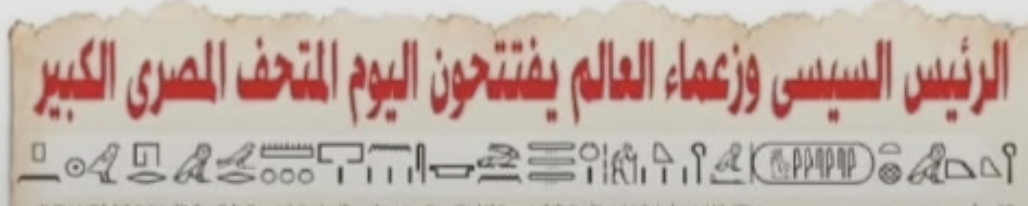
| 𓋾𓈎𓆎 𓅓𓏏𓊖 𓍹 𓇋𓋴𓇋𓋴𓇋𓇋𓀭𓍺 𓅓𓂝 𓋾𓈎𓏥𓀗𓏪 𓏌𓏤 𓇾𓇾𓇾 𓃹𓈖𓋴𓈖𓏥𓉐𓏤𓏠𓏌𓏌𓏌𓅨𓂋 𓅓 𓉔𓂋𓅱𓇳 𓊪𓈖 | HqA km.t (Essisi) ma HkA.w n.w tA.w, wn.sn pr-mn.w-wr m hrw pn | President El-Sisi and world leaders are inaugurating the Grand Egyptian Museum today. |
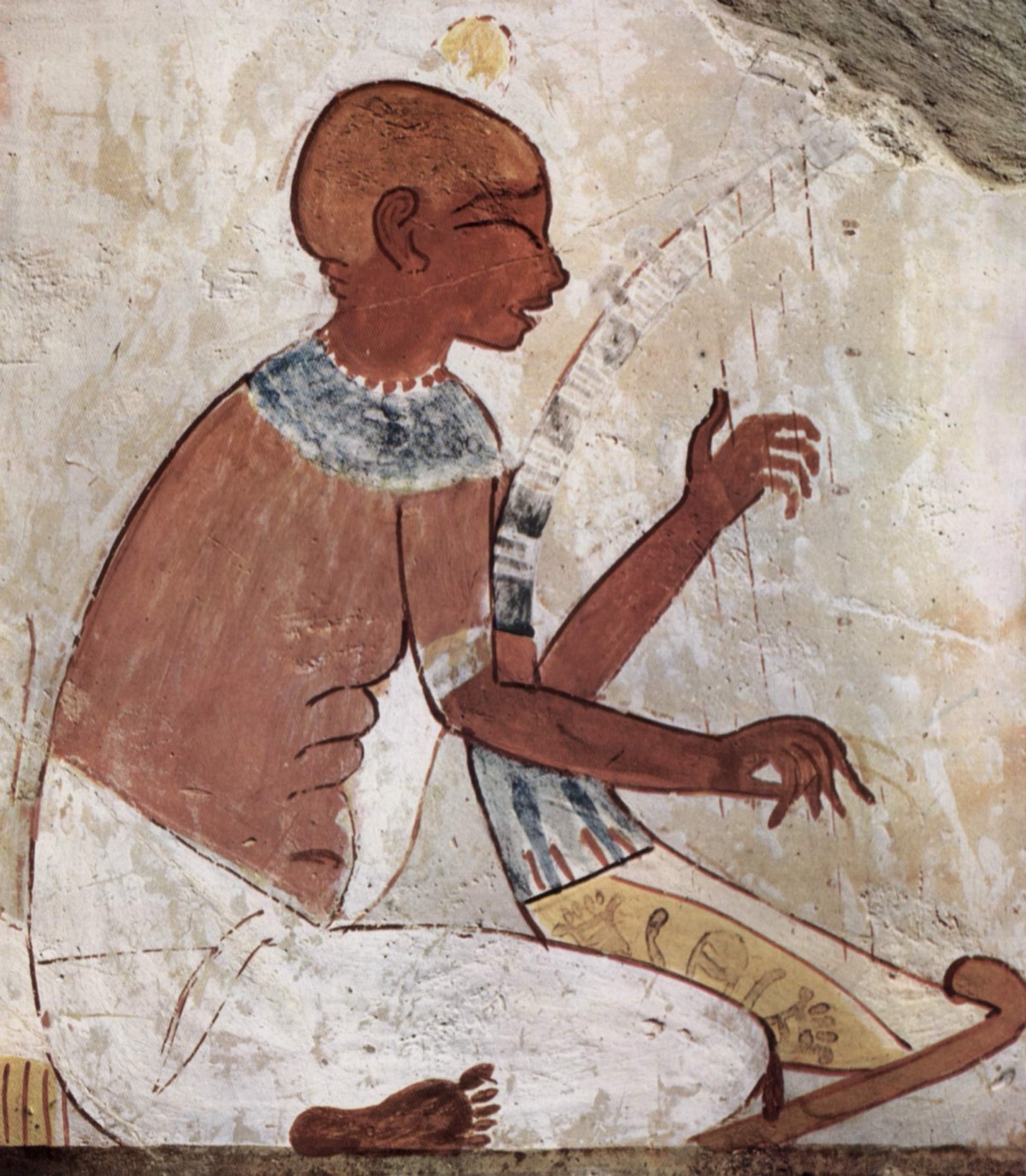
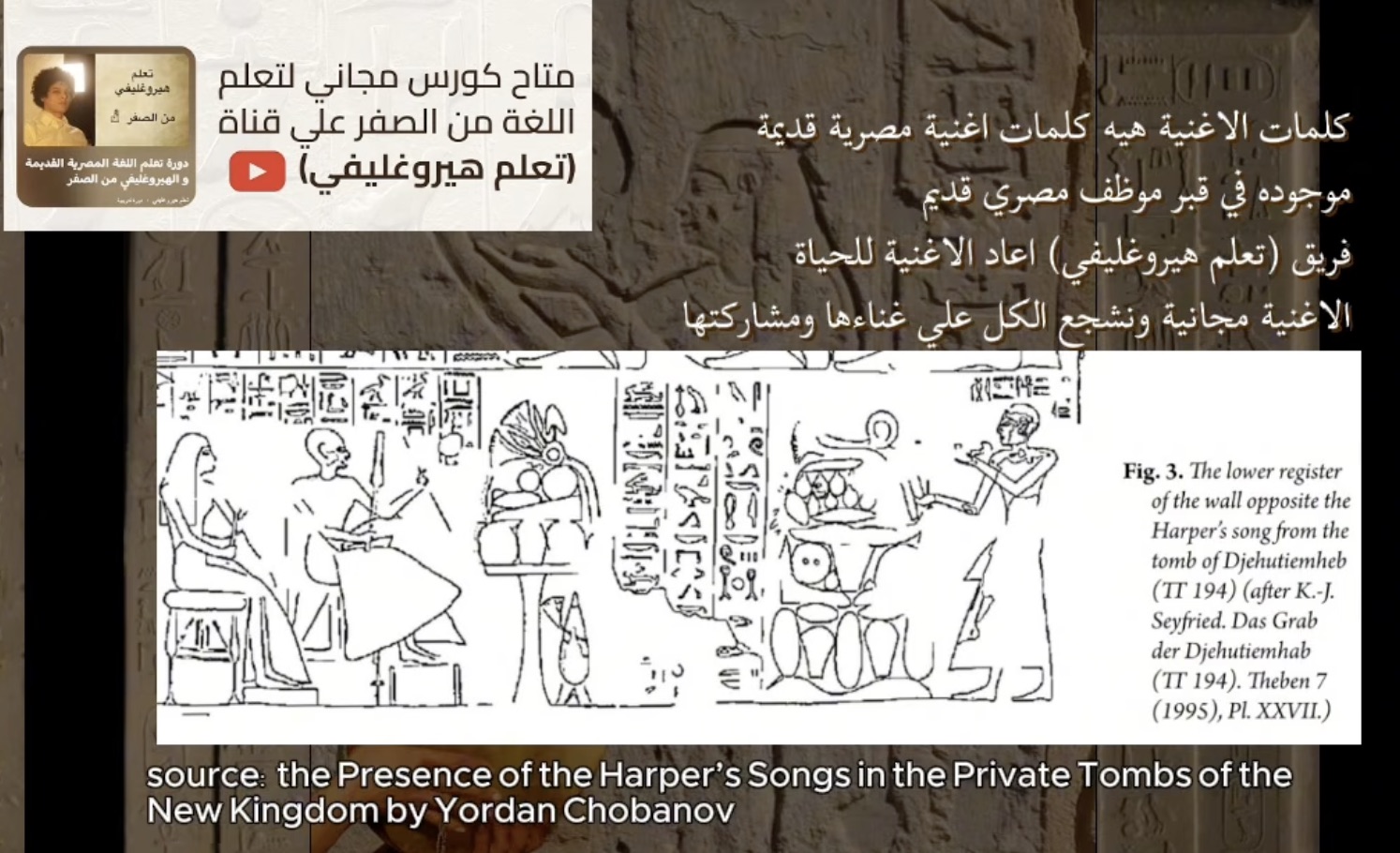
The Harper’s Song from the tomb of the ancient Egyptian official Djehutyemheb (TT 194)
| Hieroglyphs | Egyptian (Latin transliteration) | English |
|---|---|---|
| 𓃹𓈖𓉿𓏲 𓈖𓎡 𓊪𓏏𓇯 | wn.w n.k pt | the sky opens for you |
| 𓃹𓈖𓉿𓏲 𓈖𓎡 𓇿 | wn.w n.k tA | the earth opens for you |
| 𓃹𓈖𓉿𓏲 𓈖𓎡 𓄤 𓅓 𓊻𓏏𓈉 | wn.w n.k nfr m xrt-nTr | the good path for you leads to the necropolis |
| 𓅧𓈎𓂻𓎡 𓉐𓂋𓂻𓎡 𓏇𓇋 𓂋𓂝𓇳 | aq.k pr.k mi ra | you exit and enter like the sun |
| 𓅱𓋴𓍿𓈖𓂻𓎡 𓏇𓇋 𓎟𓏪 𓎛𓇳𓎛𓀭 | wstn.k mi nb.w nHH | you stride without boundaries like lords of Eternity |
17. Pronouns of All Kinds
| Suffix pronoun | Dependent pronoun | Independent pronoun | English |
|---|---|---|---|
| .i | wi | ink | I |
| .k | tw | ntk | You (masculine singular) |
| .t | tn | ntt | You (feminine singular) |
| .f | sw | ntf | He |
| .s | st | nts | She |
| .n | n | inn | We |
| .tn | tn | nttn | You (plural) |
| .sn | sn | ntsn | They |