Ancient Egyptian Conversation: Wennefer and Amr, Part 1
This article was written in Arabic; the English below is a rendering of the same text.
This is the first complete conversation in Ancient Egyptian we will read together. Wennefer and Amr greet each other, ask how they are, talk about what they do, and agree to start learning the Egyptian language. The sentences are short and simple, written for beginners, and every word comes from Middle Egyptian, the classical language of the Middle Kingdom (about 2000 to 1700 BCE).
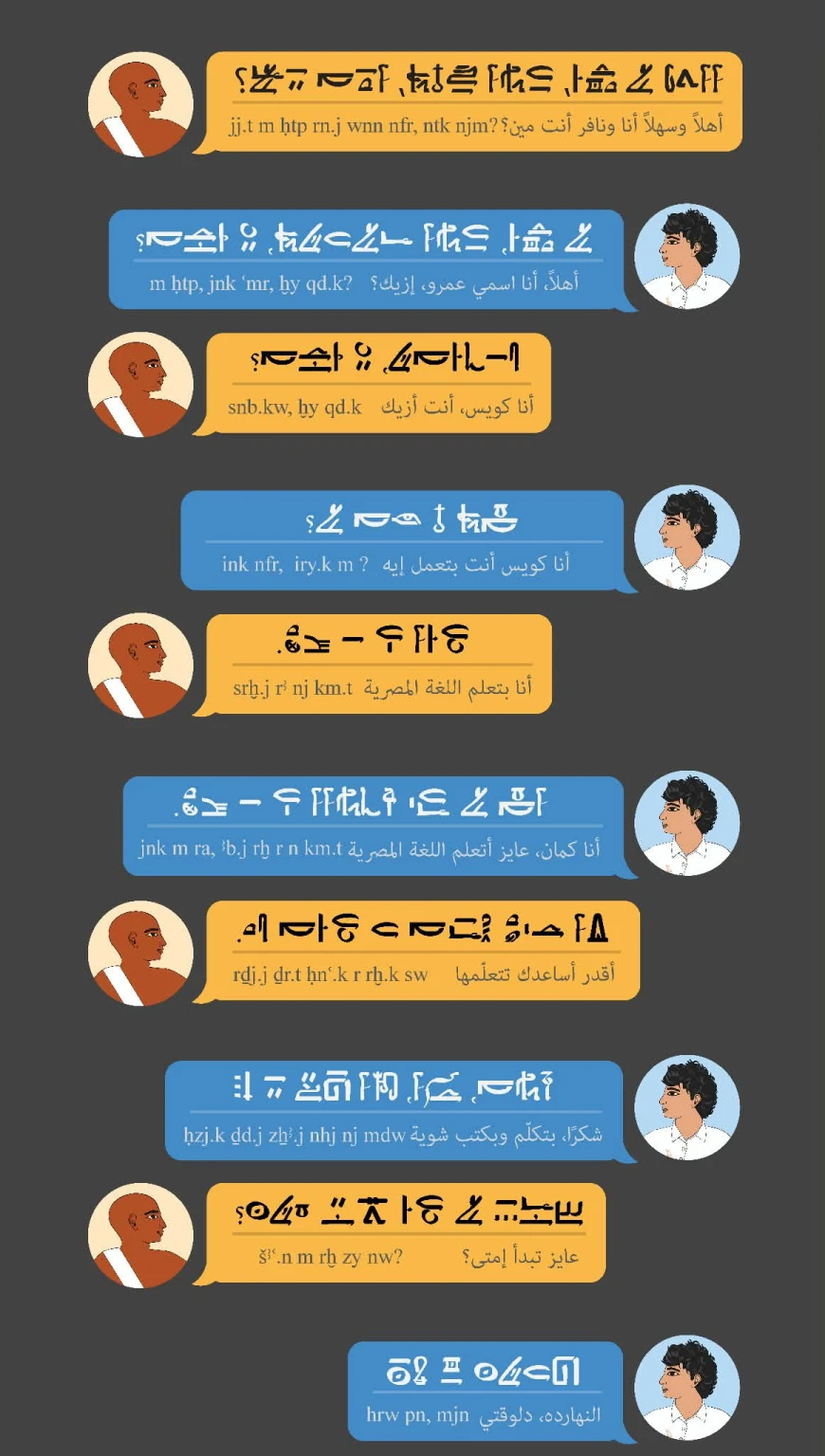
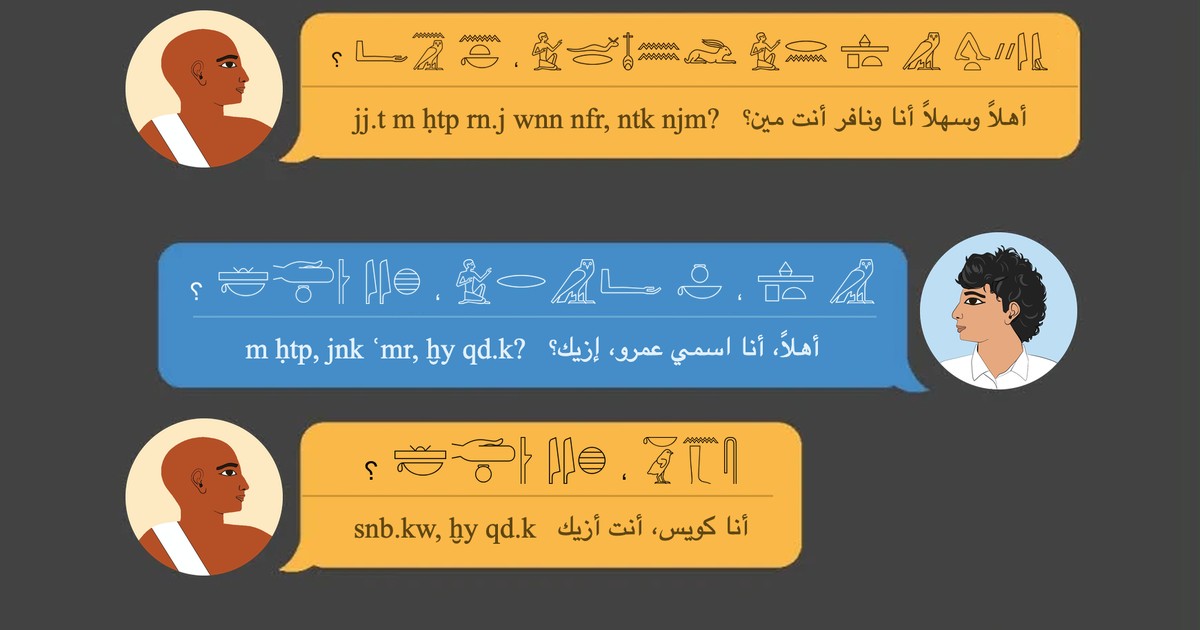
The picture below shows the whole conversation as a chat. Each message is written in hieroglyphs, with the Latin transliteration and the Arabic translation under it. The yellow bubbles are Wennefer and the blue bubbles are Amr. The hieroglyphs read from right to left, so the signs face right, and the small signs are stacked in squares the way the ancient scribes arranged them.
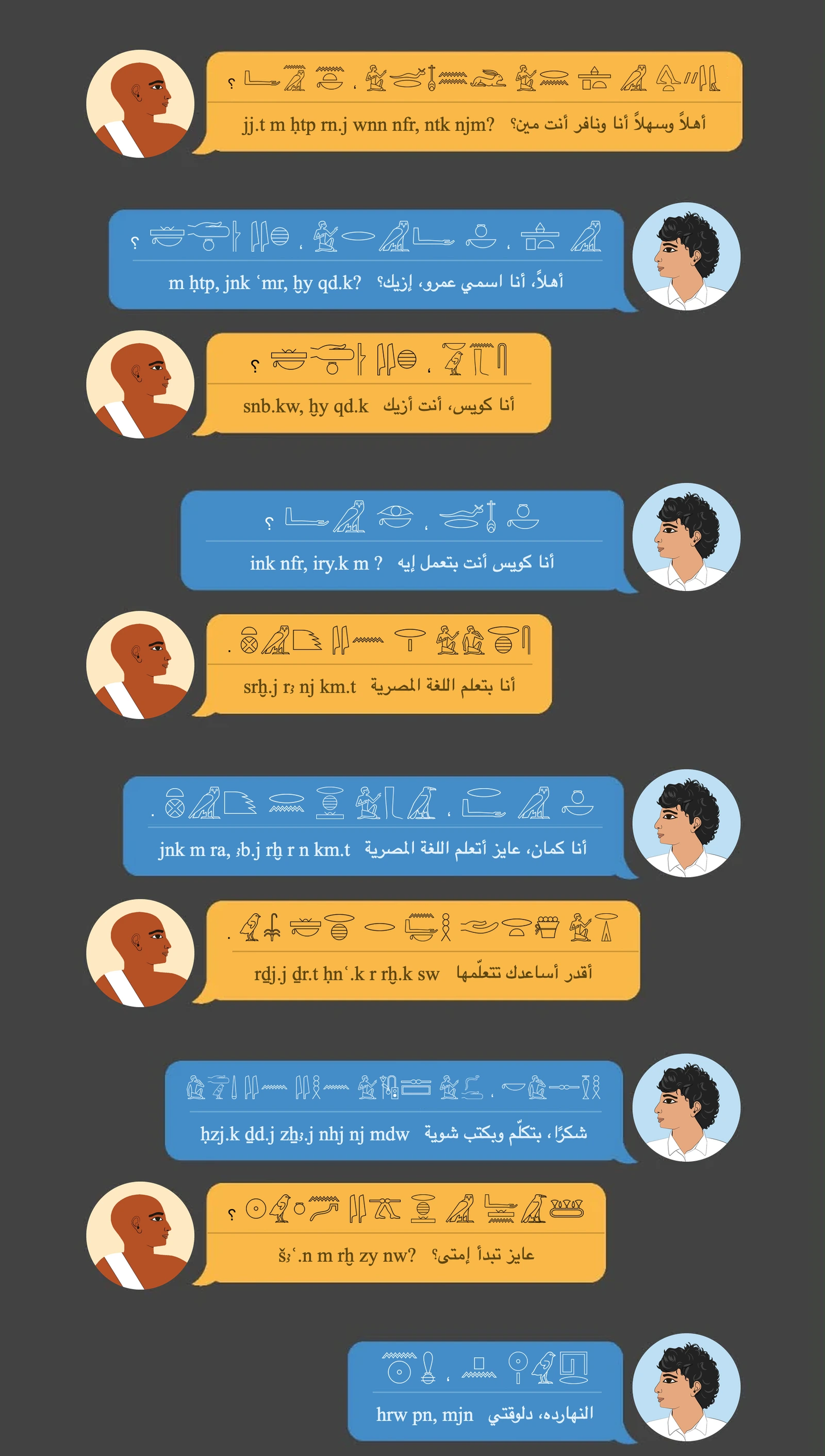
The table in the next section follows the same order, line by line, with the hieroglyphs of each sentence written from left to right. The Latin letters in the table are the Bastet letters (H for ḥ, x for ḫ, X for ẖ, D for ḏ, a for ꜥ, A for ꜣ, i for j), while the picture uses the academic marks. Under some rows, the Note toggle explains the literal meaning of the Egyptian.
This is a modern teaching dialogue built from Middle Egyptian words, not an ancient text, so its phrasing is deliberately plain. If you are just starting out, begin with the first dictionary article and come back.
1. The Conversation, Line by Line
Wennefer opens the conversation and Amr answers.
| Speaker and hieroglyphs | Egyptian (Latin transliteration) | English |
|---|---|---|
 𓇍𓇋𓏭𓂻𓏏 𓅓 𓊵𓏏𓊪 𓂋𓈖𓀀 𓃹𓈖𓈖 𓄤𓆑𓂋𓀀 𓈖𓏏𓎡 𓈖𓅓𓂝 𓇍𓇋𓏭𓂻𓏏 𓅓 𓊵𓏏𓊪 𓂋𓈖𓀀 𓃹𓈖𓈖 𓄤𓆑𓂋𓀀 𓈖𓏏𓎡 𓈖𓅓𓂝 | ii.t m Htp rn.i wnn-nfr, ntk nim?NoteLiterally: “you have come in peace (m Htp); my name is Wennefer; who are you?”. Wennefer (wnn-nfr) is a real Egyptian name and also an epithet of Osiris. | Welcome! I am Wennefer. Who are you? |
 𓅓 𓊵𓏏𓊪 𓏌𓎡 𓂝𓅓𓂋𓀀 𓐍𓇌 𓐪𓂧𓏌𓏛𓎡 𓅓 𓊵𓏏𓊪 𓏌𓎡 𓂝𓅓𓂋𓀀 𓐍𓇌 𓐪𓂧𓏌𓏛𓎡 | m Htp, ink amr, xy qd.k?NoteTo introduce yourself, say ink followed by your name. The word qd means character or condition, so the question asks about your state. | Hello, my name is Amr. How are you? |
| 𓋴𓈖𓃀𓎡𓅱 𓐍𓇌 𓐪𓂧𓏌𓏛𓎡 | snb.kw, xy qd.kNoteThe word snb means healthy or well, and the ending .kw means “I am”. | I am well. How are you? |
| 𓏌𓎡 𓄤𓆑𓂋 𓁹𓎡 𓅓𓂝 | ink nfr, iri.k m? | I am fine. What do you do? |
| 𓋴𓂋𓐍𓀁𓀀 𓂋𓏤 𓈖𓇌 𓆎𓅓𓏏𓊖 | srx.i rA ni kmtNoteLiterally “I make known the speech of Egypt”; rA means mouth, speech and language. The picture’s Arabic line can be read as “I teach” or “I learn”; the verb srx means “to make known”, so we read “teach”, which also fits the offer of help in the next line. | I teach the Egyptian language. |
| 𓏌𓎡 𓅓 𓂋𓂝 𓄿𓃀𓀀 𓂋𓐍𓏛 𓂋 𓈖 𓆎𓅓𓏏𓊖 | ink m ra, Ab.i rx r n kmtNoteThe Egyptian is simpler than the Arabic: “I… I want to know the speech of Egypt”. The verb rx means to know or to learn. | Me too, I would like to learn the Egyptian language. |
| 𓂋𓏙𓀀 𓇥𓂋𓏏𓂩 𓎛𓈖𓂝𓎡 𓂋 𓂋𓐍𓏛𓎡 𓇓𓅱 | rdi.i Dr.t Hna.k r rx.k swNoteLiterally “I give a hand with you so that you know it”, much like the English “lend you a hand”. | I can help you learn it. |
| 𓎛𓎿𓊃𓀁𓎡 𓆓𓂧𓀀 𓊃𓈙𓏞𓀀 𓈖𓎛𓇌 𓈖𓇌 𓌃𓂧𓅱𓀁 | Hzi.k Dd.i zXA.i nHi ni mdwNoteThe verb Hzi means to praise or favour, and Hzi.k is the thanking formula here. We spelled nHi (“a little”) with its sounds, since there is no standard dictionary writing for it in this sense. | Thank you. I speak and write a little. |
| 𓆷𓄿𓂝𓏛𓈖 𓅓 𓂋𓐍𓏛 𓊄𓇋𓇋 𓈖𓍇𓏌𓅱𓇳 | SAa.n m rx zy nw?NoteLiterally “begin to learn at which time?”, so zy nw works as “when?”. | When do you want to begin? |
| 𓉔𓂋𓅱𓇳𓏤 𓊪𓈖 𓏇𓈖𓇳 | hrw pn, minNoteLiterally “this day, today”. | Today, right now. |
2. The Words of the Conversation
Every word used above, with its hieroglyphs. Endings such as .i (“I, my”) and .k (“you, your”) are listed on their own.
| Hieroglyphs | Egyptian (Latin transliteration) | English |
|---|---|---|
| 𓇍𓇋𓏭𓂻 | ii | to come |
| 𓅓 | m | in, with |
| 𓊵𓏏𓊪 | Htp | peace, satisfaction (also an offering) |
| 𓂋𓈖 | rn | name |
| 𓀀 | .i | I, my (suffix) |
| 𓃹𓈖𓈖 𓄤𓆑𓂋 | wnn-nfr | Wennefer (a name) |
| 𓈖𓏏𓎡 | ntk | you (pronoun) |
| 𓈖𓅓𓂝 | nim | who? |
| 𓏌𓎡 | ink | I (pronoun) |
| 𓂝𓅓𓂋𓀀 | amr | Amr (a name) |
| 𓐍𓇌 | xy | how (in the greeting) |
| 𓐪𓂧𓏌𓏛 | qd | character, condition |
| 𓎡 | .k | you, your (suffix) |
| 𓋴𓈖𓃀 | snb | healthy, well |
| 𓄤𓆑𓂋 | nfr | good, beautiful |
| 𓁹 | iri | to do, to make |
| 𓅓𓂝 | m | what? |
| 𓋴𓂋𓐍𓀁 | srx | to make known, to teach |
| 𓂋𓏤 | rA | mouth, speech, language |
| 𓈖𓇌 | ni | of (genitival adjective) |
| 𓆎𓅓𓏏𓊖 | kmt | Kemet, Egypt |
| 𓄿𓃀 | Ab | to wish, to want |
| 𓂋𓐍𓏛 | rx | to know, to learn |
| 𓂋 | r | to, in order to |
| 𓂋𓏙 | rdi | to give, to put |
| 𓇥𓂋𓏏𓂩 | Dr.t | hand |
| 𓎛𓈖𓂝 | Hna | with |
| 𓇓𓅱 | sw | him, it (pronoun) |
| 𓎛𓎿𓊃𓀁 | Hzi | to praise (hence “thank you”) |
| 𓆓𓂧 | Dd | to say, to speak |
| 𓊃𓈙𓏞 | zXA | to write |
| 𓈖𓎛𓇌 | nHi | a little |
| 𓌃𓂧𓅱𓀁 | mdw | speech, words |
| 𓆷𓄿𓂝𓏛 | SAa | to begin |
| 𓊄𓇋𓇋 𓈖𓍇𓏌𓅱𓇳 | zy nw | when (literally: which time) |
| 𓉔𓂋𓅱𓇳𓏤 | hrw | day |
| 𓊪𓈖 | pn | this (masculine) |
| 𓏇𓈖𓇳 | min | today, now |
3. How the Sentences Are Built
- Names: say ink and then your name, as Amr does, or rn.i and then the name for “my name is”, as Wennefer does.
- Pronoun endings: .i means “I, my” and .k means “you, your”, attached to the end of the word: rn.i “my name”, qd.k “your condition”, Dd.i “I speak”.
- Greeting: m Htp, “in peace”, works for hello and welcome, and Hzi.k says thank you.
- Questions: nim asks “who?”, m asks “what?”, and zy nw asks “when?”.
4. Keep Going
Look up any of these words in the Bastet dictionary articles, and read a complete ancient story in the Tale of the Shipwrecked Sailor. To see more Egyptian written for today’s readers, try Made in Egypt in Ancient Egyptian.
5. The Same Chat in Hieratic
Here is the same conversation in hieratic, the fast handwriting scribes used on papyrus for letters, accounts and literature. Compare each line with the hieroglyphs above: many hieratic signs are simplified forms of the same hieroglyphs.